Tuesday, May 27, 2014

Slotted Beads

I recently saw a forum post that said you can only use slotted beads when using the latest fad in jig style fly hooks. I personally think its an incorrect statement .

Another statement involved using lead wire in conjunction with the slotted bead to more or less fill in the slot and to obviously add a little more weight. Well that's all well and good but....

And there's the statement about the gaping hole of the round bead at the tie off point of the fly! Well what about the gaping hole left by the SLOTTED bead?

Slotted beads are easier to clear a barb if you're not using barbless hooks. Its also pretty easy to pinch down the barb!

So I experimented on my own to see if a round bead could be used on a jig style hook that tyers say only a slotted bead should be used.

I used the following materials for my crude test:

Hends brand BL120 60 degree bent hook in a size 8 (shank diameter of .024 thousandths of a inch/0.6096mm) 

Note: Most of today's hook manufacturers make a similar style hook.


I used a  counter drilled round bead


I also used a 5/32 inch diameter (0.15625 inches/3.9688mm) slotted round bead


.020 inch/0.508mm diameter Lead Wire


So that's what I used for my little experiment

Here are some photos of the results.

Slotted Bead


Round Bead


Slotted Bead with .020 inch/0.508mm diameter Lead Wire


Round Bead with .020 inch/0.508mm diameter Lead Wire


As the photos indicate a round bead can be used in conjunction with the jig style hooks and can also accept the lead wire to fill in the counter drilled hole on the round bead whereas the slotted bead cannot accept lead wire to fill in the slot unless flattened and inserted into the slot.

While this little experiment was done using one size hook and one size bead (slotted and round),
I would expect the results may be the same for different sizes.

This experiment is not earth shattering nor will it turn the tying world upside down. It was only meant to dispel the statements that round beads do not work with these jig style hooks.

Thanks for looking.

Saturday, April 19, 2014

Monday, March 17, 2014

I saw a fly.....

I just read this question on a fly tying forum

I saw a fly recently at Texas Trout fest but don't know the name of it.  It had a cylindrical foam body and deer hair head.  I think its a Redfish fly but not sure. If anyone has any info, tying instructions or can upload a picture, I'd be indebted to you.


With the advent of the cell phone or point and shoot cameras, 
it would solve a lot of this type of questions by just taking a photo of the subject and jotting down the name of it in the notes app.

Friday, February 28, 2014

Biot Wing Cases

Wing cases can be made from just about any kind of feather to synthetic materials.

One natural material that is not always thought about as a wing case material is the BIOT. 

Yes, the biot(s) can be used as a wing case. 

For smaller flies 1 biot is generally enough. On larger flies you can tie in multiple biots to get the wing case effect.


Biots are less likely to split like feather fiber wing cases

You could even add flash over the biot to make a flashback style wing case

Use different color biots 

Use a fluorescent colored biots as a hot spot

Be creative. Experiment.

Thanks for looking

Saturday, February 1, 2014

Damsels in Distress

.

Fly Tying Thread


Fly tying thread can be confusing for a beginner and experienced tyers alike. I am not going to try and explain the ins and outs of fly tying thread but I will guide you to the following articles to better explain the differences.


http://www.renegadefishers.com/material/thread.html

http://globalflyfisher.com/tiebetter/thread_control/#sp

http://mvff.tripod.com/Reference/Denier.pdf

http://whitetailflytieing.com/thread/

http://northfloridaflyfishing.com/pdf/DeniertoStandarizeTyingThread.pdf

Sunday, January 5, 2014

Tying Tip #19 - Unraveled Materials

Eventually we all get materials that just get unraveled and get stuffed back into a zip lock bag. Here is a couple of ideas to get things back in order.

Clothes Pins

Popsicle sticks

Thanks for looking.


Sunday, September 1, 2013

Materials


I'll be turning 61 in a few weeks, and I have to keep reminding myself to stop buying more materials and to start tying flies with the current supply of materials on hand. I have more tying materials that I will never use up on the remaining time I have left on good old mother Earth. 30+ years of buying can amass quite a collection of fly-tying materials.

Friday, June 21, 2013

Getting Buggy

You have all seen the question of how to get rid of bugs in materials on most fly tying forums and there is always various answers to the problem. Here are my simple rules that I have adopted to control or even eliminate bugs in my materials. My results do not infer that your results will be the same.


I try to do my best at avoiding infestation to my other materials and my house.

I don't pick up road kill (illegal to do so in a lot of areas) I let the big birds eat it 

I don't want bugs in my microwave or freezer (dead or alive)

Good hackle is a major expense when it comes to tying materials. 
I buy Whiting hackle (lesser chance of getting infested)

All hackles stay in original sealed packaging and stored separately in a dedicated plastic box

No hackles sit out on tying desk for days on end. They are promptly returned to original packaging after use.

I don't buy from any local chicken hackle farm. (none around anyway) I don't know whats infected.

I buy hackles at fly shops and never online. I can inspect them for multiple things and bugs is one of them.

I don't use moth balls (too stinky), pest strips or cedar balls/strips.
I add cedar scented moth ball packets to all of my hackle and feather shoe box containers.

I add pieces of clove spice to all of my hackle packages.

I never accept free animal parts from anybody!

45+ years of doing the above and no bugs in my materials or house. I must be doing something right.

Wednesday, May 29, 2013

In Need of Flat Lead Wire?

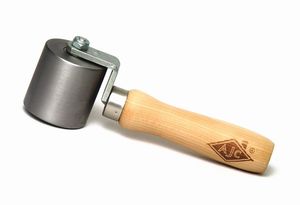
Take your current round lead wire and flatten it with a seam roller


Flat nose pliers


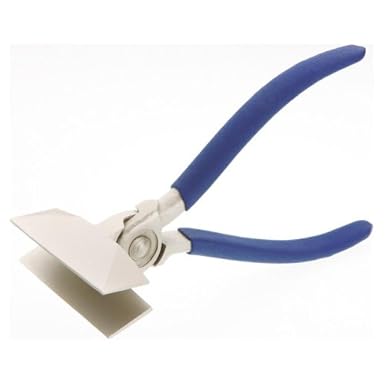
Sheet Metal Pliers

Thanks for looking

Sunday, May 26, 2013

RIT Color Guide for Dyeing Materials


Go to the following link and click on a color for its recipe.

Click in the scroll bar to change colors.