Tuesday, March 5, 2013

Info Charts for the Fly Tyer


FACETED AND ROUND TUNGSTEN BEADS
BEAD SIZE
HOOK SIZE
SINK RATE (IN/SEC)
5/64 (.078IN / 1.98MM)
18 - 20
19.55
3/32 (.093IN / 2.38MM)
16 - 18
20.57
7/64 (.109IN / 2.78MM)
14 - 16
23.20
1/8 (.125IN / 3.18MM)
12 - 14
25.25
5/32 (.156IN / 3.97MM)
8 - 10
26.57
3/16 (.188IN / 4.76MM)
4 - 6
29.27


ROUND BEAD HEAD BEADS

 
BEAD SIZE
HOOK SIZE
SINK RATE (IN/SEC)
1/16 (.062 / 1.5MM)
20 - 22
N/A
5/64 (.078IN / 2.0MM)
18 - 20
13.45
3/32 (.093IN / 2.3MM)
16 - 18
14.88
1/8 (.125IN / 3.2MM)
12 - 14
15.79
5/32 (.156IN / 4.0MM)
8 - 10
18.21
3/16 (.188IN / 4.8MM)
4 - 6
21.07
7/32 (.218 / 5.6MM)
2 - 4
22.50


HOT BEADS


BEAD SIZE
HOOK SIZE
SINK RATE (IN/SEC)
1/8 (.125IN / 3.18MM)
12 - 14
15.79
5/32 (.156IN / 3.97MM)
8 - 10
18.21
3/16 (.188IN / 4.76MM)
4 - 6
21.07


TUNGSTEN CONE HEADS 


BEAD SIZE
HOOK SIZE
SINK RATE (IN/SEC)
SMALL
3/16 (.188IN / 4.8MM)
4 - 6 - 8
25.00
MEDIUM
7/32 (.218IN / 5.6MM)
2 - 4
27.14
LARGE
1/4 (.250IN / 6.3MM)
1 - 2 - 4
29.32

  
SEED BEAD APPROXIMATE DIAMETER


BEAD SIZE
INCHES
MILLIMETERS
6/0
.145
3.7
7/0
.134
3.4
8/0
.118
3.0
9/0
.102
2.6
10/0
.091
2.3
11/0
.087
2.2
12/0
.074
1.9
14/0
.063
1.6
15/0
.059
1.5


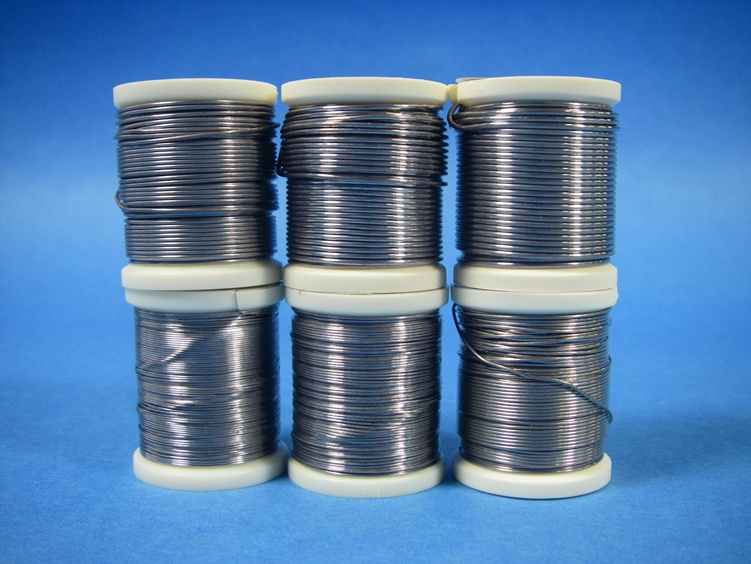
 LEAD WIRE TO HOOK SIZING CHART 


HOOK SIZE
WIRE SIZE
4 AND LARGER
.035
4 – 6
.030
6 – 10
.025
12 – 14
.020
14 – 16
.015
18 AND SMALLER
.010


DISCLAIMER

The charts shown above are simply for information only and to provide the fly tyer with a basic guide as to what fits what. The information is not carved in stone and it is up to the fly tyer should decide to use these charts or not. It should be noted that the fly tyer may opt for a different bead size for a given hook or may want to apply a different diameter of lead wire to a given hook size. Tyers preference.

Friday, March 1, 2013

Sunday, February 24, 2013

Dubbing Brushes


Are dubbing brushes a new product for fly tyers? 

No! They actually date back to the late 1880s. Shown below is a couple of paragraphs from the book Floating Flies and How to Dress Them by Frederic M. Halford.


For the legs and bodies of some flies the hair or fur of certain animals (dubbing) is used in place of ordinary hackles; and in such cases the plan adopted is to spin or twist it on the tying-silk for the body of the fly, taking care to put an extra thickness on to the shoulder-end of the body, tapering it to the tail, and after the fly is completed to pick out with the dubbing-needle a few fibres to form the legs. There are, however, patterns in which the body is of plain silk or quill, and the legs only of dubbing, and in these instances a somewhat more complicated procedure is necessary.

Thoroughly wax a short length of tying-silk and double it over the dubbing-needle, the point of which is firmly stuck into the edge of the operating-table. Separate the fibres of the hair or fur to be used, and lay them as much as possible horizontally across one end of the tying-silk a, FIG 8; place the other end of the silk over and press it closely down on the fur, FIG 9; then, taking the two ends of the silk between the thumb and forefinger of the right hand, twist up tightly. The effect of this will be to twist up the silk and fur between the two ends of it, as shown in FIG 10, into a rough-looking hackle, which is used exactly like an ordinary one, the silk representing the central quill, and the fur the fibres of the hackle. By the same method, having a hackle of the right colour, but too long in the fibre for the size of the hook, the dresser can, by detaching the separate strands, laying them horizontally across a length of thoroughly waxed doubled tying-silk, and, twisting them up as above, produce an imitation hackle with fibres only half the length of the natural one from which they were taken.


Reference
Halford, Frederic M. (Frederic Michael)
Floating Flies and How to Dress Them


Sunday, February 17, 2013

Brush Cap Modification


So you just got a bottle of your favorite fly tying adhesive such as one of the UV cured resins, brush on crazy glue, Sally Hansens finger nail polish or even head cement and you find the bristles are just to big to apply fine amounts in a tiny space? Just take out the brush from the bottle and wipe off the excess amount of liquid on the brush and with a pair of cheap/good scissors, trim off the bristles you don't need leaving the right amount of bristles for your application. 

Be sure to wipe down you scissors after trimming the bristles. 

Plain, simple and easy to do.

BEFORE


AFTER


Sunday, January 27, 2013

Fishing Places


Big Horn River, Montana


Tall Timber Lodge, New Hampshire


Salmon River, Connecticut


Hopeville Pond, Connecticut

Thanks for looking.


Tuesday, January 22, 2013

Save the Fluff


Save the Fluff

I dont normally save the remnants of hackle feathers or other materials but you can save them in a zip lock bag for reuse. The hackle tips can be used a tails on certain patterns, remove the fibers from the quill and the quill can be used as a body material and the webby material at the base of  hackle feather can also be used as tailing, wings on midges and chopped up for  dubbing.

Saturday, January 5, 2013

Tying Tip #13 - Bobbin Holder Tension

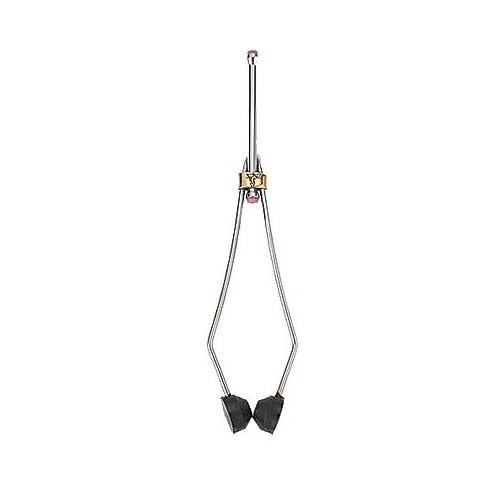
When using this style of bobbin holder and you are unable to pull thread out of the tube, you will have to adjust the tension by simply spreading apart the arms that hold the thread spool. Don't spread the the arms too far or the spool will spin freely. Just find the right tension for your tying style. Bend the arms until you get it just right.


The bobbin holders shown below have other methods of adjusting the tension on the thread spool.
Stonfo
Rite
Petitjean


Sunday, December 30, 2012

Minnow (generic)


Remove a couple of STIM-U-DENTS from the package and position 1 on top of the hook shank as shown, approximately at the barb of the hook.


Switch hands and continue to hold the toothpick. Mark the toothpick for length and for the forward shape of the body as shown.


Transfer the measurement to the other toothpick and tie the toothpicks onto the hook shank. At this time, you can head cement the entire body if desired. Then tie in the marabou tail. Tying Note: you could add flat strips of lead (such as TWISTONS) along the body or a piece of lead wire along the underside of the body for a weighted version.


Tie in a strip of bills body braid (green for the back) and a strip of bills body braid (silver or pearl for the body).


Wrap the silver braid forward and tie off. Pull the back braid forward over the top of the body and tie off.


Add eyes and whatever marking you want with the acrylic paint and let dry. Coat the body of the fly with a UV resin or epoxy. overcoat with Sally Hansen's hard as nail polish if necessary.


Minnow (generic)

Hook - Mustad 9671, 9672 or equivalent
Thread - White or clear mono
Under body - Shaped stim-u-dent toothpicks
Tail - Marabou
Back - Bills body braid or equivalent
Over body - Bills body braid or equivalent
Eyes and body markings - Acrylic paint
Coating - UV resin, epoxy and Sally Hansen's hard as nails

The shown above recipe is merely a suggestion of what to use. As a creative tyer you have the option to switch items in the recipe to suit your needs or material supply.

Weighting Options


An older fly pattern known as the "JANSSEN MINNOW" can be tied in this manner. Paint up your minnow to look like them or be creative.


Thanks for looking.

DuBois Hackle Gauge

I was lurking on Ebay one evening and I spied an item called the "Du Bois Fly Fisherman's & Fly Tier's Gauge". I am familiar with other types of hackle gauges but I had never heard about this on so I ended up buying it for a reasonable price. This gauge is multi functional as opposed to other hackle gauges. It allows you to check on hook sizes, wet and dry tail length, wet and dry hackle length and wet and dry wing lengths. All in one gauge. Simple enough.

The gauge comes in a clear plastic protective sleeve and an instruction sheet on how to use the gauge.


Hackle Gauge


Instruction Sheet


Monday, December 17, 2012

Fly Fishing is a Joke


Buying Samples

I recently saw this on a fly tying forum. The tyer saw a pattern in a fly bin, got home and recreated it by memory and then asked other forum members if they knew the name of the pattern.

If you want to recreate that fly pattern you saw in whatever kind of shop you saw it in, buy 1-3 flies to have as samples and/or to deconstruct a fly to see how the pattern was tied. Shops will usually have the condiment cups or zip lock baggies to put flies in. Jot down the pattern name, size and where you bought it from for future reference. When you get home, take one out and photograph it for additional reference.

Don't try to go by memory after you get home.


Great for holding samples.


Tuesday, November 27, 2012

Wednesday, September 19, 2012

I Don't Know....

.....what I did right but I made it to the big


I just wish I could get more senior discounts!!

Monday, September 17, 2012

Iphone 5


Not that anybody cares but I finally got sick of that POS Motorola DroidX cell phone and pre ordered the I phone 5. Unfortunately the due date is OCT 5. Not that long of a wait I guess.

Now to find some cool apps (flyfishing of course)

If anybody has some cool apps worth downloading, please leave me a comment. Not really a gamer but gotta have Angry Birds!

As always, thanks for looking!